How to Build Habits That Actually Stick (Science-Backed)
Willpower fades, but systems endure. Here is how to build habits that stick using simple, science-backed strategies anyone can apply.
Why most habits fail
Most people try to build habits with sheer willpower and grand goals — run five miles a day, meditate for an hour, quit sugar entirely. Then real life intervenes and the streak collapses. The problem is not weak discipline; it is a flawed approach. Lasting habits are built on tiny, consistent actions, not heroic bursts of motivation.
Start ridiculously small
BJ Fogg, a Stanford behavior scientist, popularized the idea of "tiny habits." Want to floss? Start with one tooth. Want to exercise? Do two push-ups. The action is so small it feels almost silly to skip. Once the habit exists, it grows naturally. Consistency beats intensity every single time.
Use habit stacking
Attach a new habit to an existing one. The formula is simple: "After I [current habit], I will [new habit]." For example, "After I pour my morning coffee, I will write down three priorities." Your established routine becomes the trigger, so you do not rely on memory or motivation.
Design your environment
Make good habits obvious and easy, and bad habits invisible and hard. Lay out your gym clothes the night before. Keep the fruit bowl on the counter and the cookies out of sight. Your environment quietly shapes your behavior far more than you realize.
Turn these tips into action
Skip the setup and start today with our beautifully designed templates, planners and guides — instant downloads, delivered the moment you check out.
Track your progress
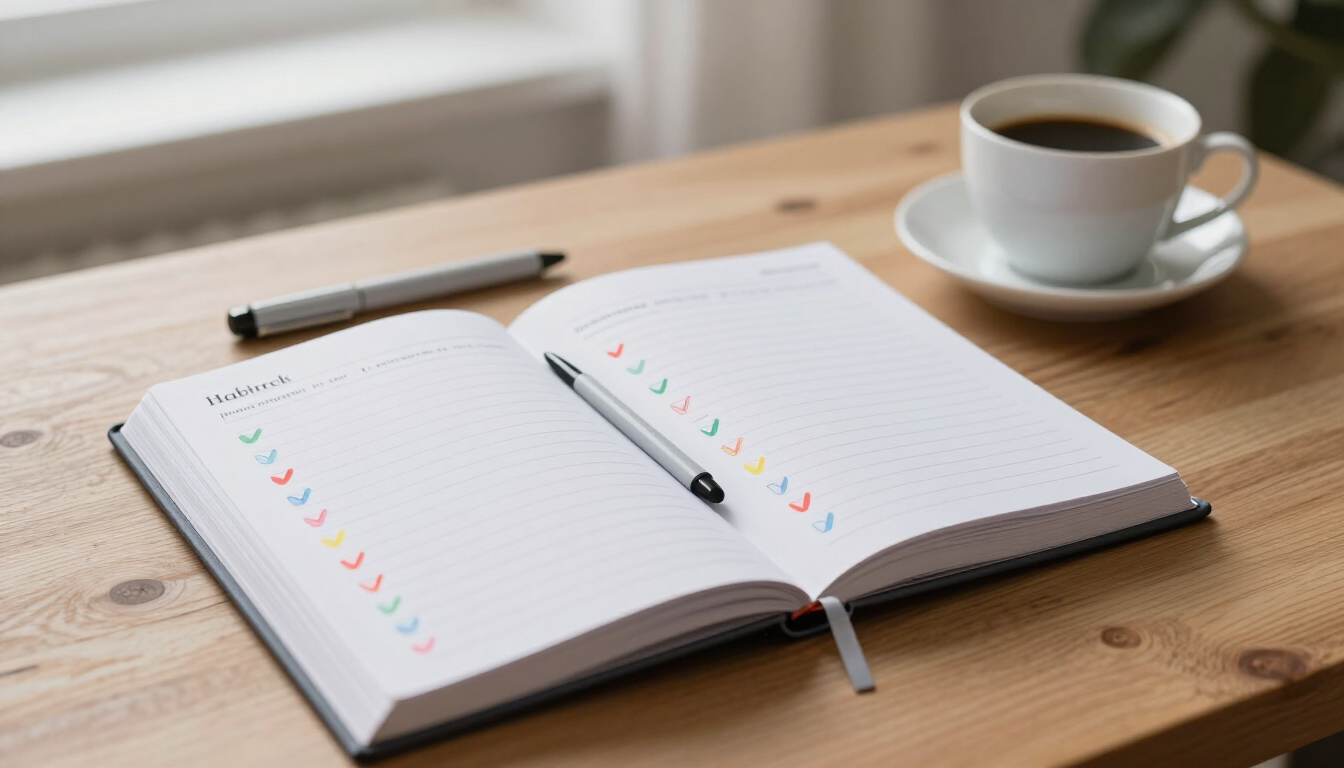
A simple habit tracker turns invisible progress into visible momentum. Marking an X each day you complete a habit creates a chain you will not want to break. Tracking also reveals patterns — you might notice you always skip on Sundays and can plan around it.
Never miss twice
Everyone misses a day; life is unpredictable. The rule that separates people who build lasting habits from those who quit is simple: never miss twice. One missed day is an accident. Two in a row is the start of a new, unwanted habit. Get back on track immediately.
Celebrate small wins
Your brain wires in behaviors that feel good. A small internal celebration — a smile, a fist pump, a genuine "nice work" — after completing a habit reinforces it. Positive emotion is the glue that makes habits automatic.
People Also Ask
How long does it really take to form a habit?
Despite the popular "21 days" myth, research suggests it takes anywhere from 18 to 254 days, with an average around 66 days. The exact time depends on the habit and the person, so focus on consistency rather than a magic number.
What is habit stacking?
Habit stacking means attaching a new habit to an existing one using the formula "After I [current habit], I will [new habit]." The established routine acts as a reliable trigger, making the new behavior far easier to remember and repeat.
Do habit trackers actually work?
Yes. Habit trackers make progress visible, create a satisfying streak you want to maintain and reveal patterns in your behavior. The simple act of marking a habit complete provides immediate motivation to keep going.
Turn these tips into action
Skip the setup and start today with our beautifully designed templates, planners and guides — instant downloads, delivered the moment you check out.